What Makes a Short Mountain Walk Feel Like a Full Day Out
A memorable day in the mountains does not have to begin before sunrise or end with a long list of kilometers. Short routes often have an advantage: there is enough time to look around, stop without guilt, and return before the walk becomes a test of endurance.
Pick a route with one clear idea
A short walk works best when the route has a simple shape. Follow a valley to a lake, climb to one viewpoint, trace a ridge for a limited distance, or walk to a pass and return. A clear idea is easier to remember than a chain of minor waypoints.
Before leaving, check the basic practical details for the specific place: access, weather, daylight, surface conditions, and whether the route has any local restrictions. The goal is to make the outing feel spacious, not uncertain.
Let the turnaround point do some of the planning
On an out-and-back route, decide roughly when you want to turn around before you start. The point can be a landmark or simply a time. That small decision makes it easier to enjoy the outward walk without constantly calculating whether you should continue.
If the weather changes or the route feels slower than expected, the turnaround can move earlier. Treating it as a flexible boundary rather than a summit-or-failure rule keeps a short walk what it is supposed to be: a pleasant day outside.
Notice the landscape in layers
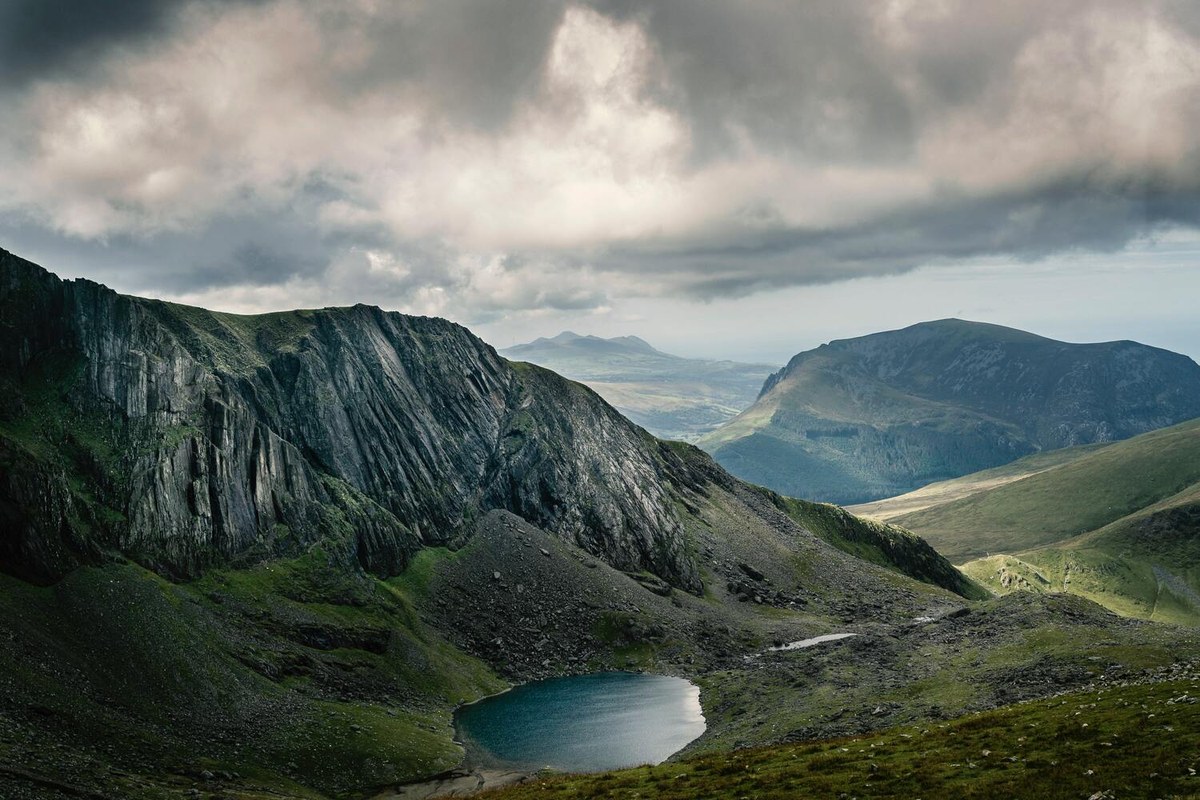
Big scenery naturally gets the first photograph, but the character of a mountain walk often lives in smaller transitions. A stony slope gives way to grass. Wind increases near an exposed shoulder. Water gathers in a hollow. The sound of a road disappears after one bend.
Choose two or three things to notice as you go: rock color, plant height, the direction of streams, cloud movement, or the way the path changes underfoot. You do not need to identify everything. Attention alone makes the route feel longer in the best sense.
Stop before the obvious viewpoint
The designated viewpoint is usually worth reaching, but the most comfortable pause may be somewhere else. A sheltered rock, a patch of dry grass, or a place where the valley opens gradually can be better for ten quiet minutes than a crowded marker at the end of the trail.
Take the break while you still feel good. Eat something simple, drink water, and spend a few minutes looking back along the route you have already walked. The return often feels different once you understand the shape of the landscape from above.
Make the return a second walk
It is easy to treat the return leg as transport back to the car or bus. Instead, look for views that were behind you on the way out. Light may have moved, clouds may have opened, and features that were hidden by the slope can become obvious from the opposite direction.
If the path is safe and clear, put the camera away for part of the return. A stretch without trying to record anything can make the day feel less like content collection and more like time spent somewhere.
Finish with a small transition
Leave enough time after the walk for one unhurried thing: tea from a thermos, a bench near the trailhead, a short stop in a nearby village, or simply changing into dry shoes before the journey home. That transition gives the outing a natural ending.
A short mountain route can feel complete because it leaves room around the walking itself. Distance matters, but so do pauses, changing light, and the simple fact that you were not in a hurry to be somewhere else.